The Big Picture of Embedded Linux Systems
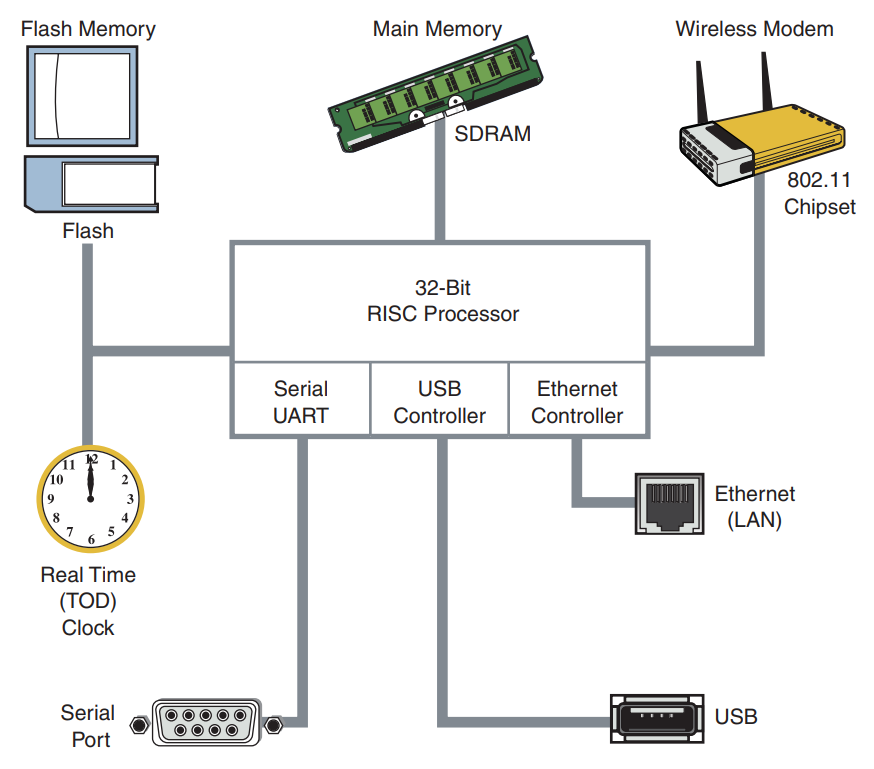
The below figure is a block diagram of a typical embedded system, which is a simple example of high-level hardware architeture of a wireless access point. The system is architected around a 32-bit RISC processor. Flash memory is used for nonvolatile program and data storage. Main memory is synchronous dynamic random-access memory (SDRAM), which might conatin anywhere from a few megabytes to hundreds of megabytes, depending on the application. A real-time clock module, often backed up by battery, keeps the time of day (calendar/wall clock, including date). This system includes an Ethernet and USB interface, as well as a serial port for console access via RS-232. The 802.11 chipset or module implements the wireless modem function.
Often the processor in an embedded system performs many functions beyond the traditional core instruction stream processing. The hypothetical processor shown in Figure 2-1 contains an integrated UART for a serial interface and integrated USB and Ethernet controllers. Many processors contain integrated peripherals. Sometimes they are referred to as system on chip (SOC)
This post is licensed under CC BY 4.0 by the author.